
Why is an MRI performed?
The most common reason for visiting an orthopedist is the presence of pain in the back, leg, arm, or similar areas. Apart from the patient’s own description, there is no test that can prove the existence of pain. When the pain is intense, persistent, and its cause is unclear, an MRI is performed — a diagnostic method that provides the most accurate visualization of the interior of the human body.
The resulting image must correspond with the symptoms described by the patient. The medical knowledge and clinical experience of your orthopedist serve to connect these symptoms with the MRI images, forming a concrete diagnosis. Based on this, your orthopedist will best explain your condition, interpret the MRI results, and determine the most appropriate treatment plan.
How is an MRI image created?
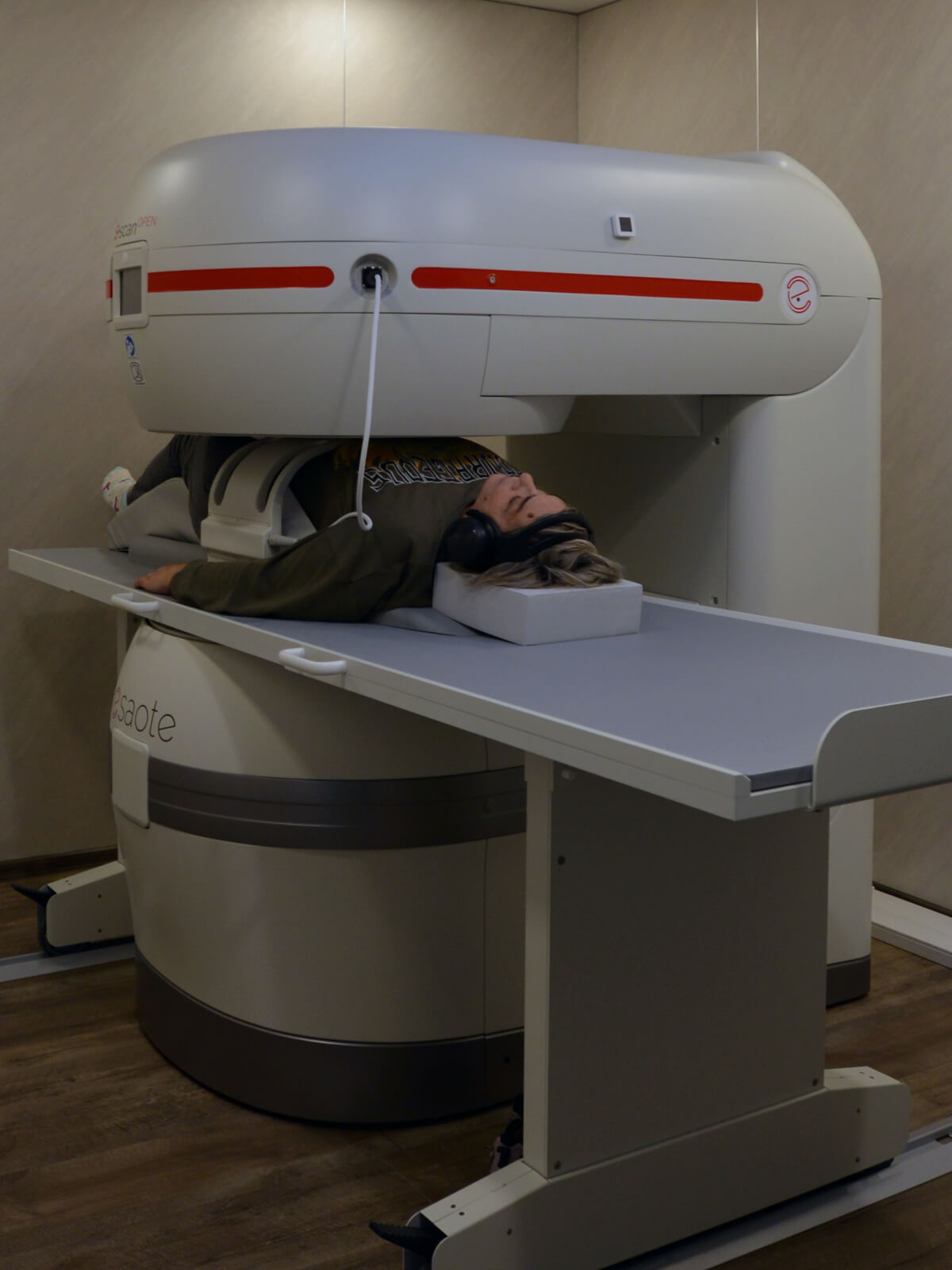
During magnetic resonance imaging, the patient lies for up to 30 minutes on a movable (sliding) table beneath an open magnet (which is more comfortable than a closed magnet). The magnetic field aligns hydrogen protons (atoms) — which normally point in random directions — toward itself. When radio waves are emitted, they temporarily knock these protons out of alignment. As they realign with the magnetic field, they release energy in the form of signals, which are recorded by the scanner.
The characteristics of these signals depend on the presence of water and fatty acids — molecules rich in hydrogen atoms — and on the differing behaviors of hydrogen atoms within those molecules. The black-and-white image of body structures is based on contrast between water-rich tissues (T2 sequence) and fat-rich tissues (T1 sequence). By adjusting the properties of the radio waves and magnetic field, different tissue contrasts can be obtained, depending on the diagnostic requirements of each scan.
The imaging process itself is painless, the environment is comfortable, and the machine noise is minimal. This MRI system can accommodate almost all patients with metal implants and is particularly suitable for those suffering from claustrophobia.